
Dental Implants Austin
Rebuilding a Tooth’s Root and Crown

Dentists have been able to replace missing teeth for decades, but dental implants take the process up to a whole other level. With a dental implant, you can replace the entire root of your tooth, not just the crown that makes up your smile. The result feels like your natural tooth, even when you’re chewing your favorite foods! If you have missing teeth and you want the most comprehensive option available in dentistry today, give our dental office a call to schedule a consultation for dental implants in Austin!
Why Choose Snow Dental for Dental Implants?
- Comprehensive Treatment That Replaces Both the Root and Crown
- Dentist Works with Some of the Best Implant Specialists in Austin
- High-Quality, Natural-Looking Restorations Provided
Partnered with Austin’s Best Dental Implant Specialists
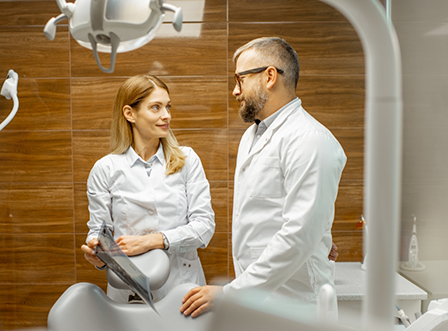
To ensure the most comprehensive and successful tooth replacement possible, Snow Dental works with some of Austin’s most experienced specialists in implant dentistry. Once we’ve confirmed that you are eligible for dental implants, you’ll have the surgical portion of your treatment performed at their office, then come back to our dental practice to have the implants restored with natural-looking, customized restorations. By working with specialists in implant dentistry, we can make sure that your implants last as long as possible and integrate properly.
The 4-Step Dental Implant Process
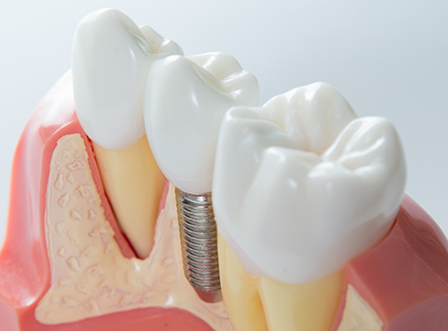
Compared to many other treatments, getting dental implants can seem very complicated to someone unfamiliar with how it works; however, it can be broken down into four simple stages: consultation, surgery, abutment, and restoration. At every step, we can guide you through the process and help you know what to expect next in your tooth replacement journey.
Initial Dental Implant Consultation
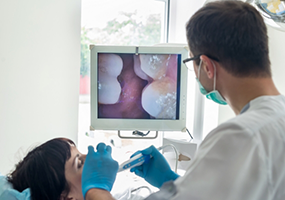
Before you go through the time, investment, and effort of getting dental implants, we need to make sure it’s a good idea for your situation! During a consultation with our dentist, she’ll examine your mouth, making sure you don’t have any infections or other impediments. If you have gum disease or another problem, we can resolve it and get you better prepared. When she gives you the green light, we will send you to meet with an implant specialist and schedule the placement procedure.
Dental Implant Surgery

Although the dental implant procedure does not take place at our office or with our team, we are still here to support you and will work with your specialist to carry out your personalized treatment plan. We trust only certain local experts, confident that they will care for our patients just as well as we do here at Snow Dental.
Dental Implant Osseointegration & Abutment
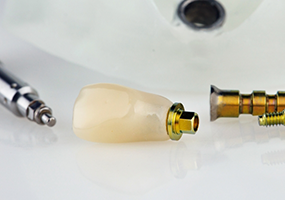
For several months, usually between three and six, you’ll need time to heal from the placement procedure. Under the gums’ surface, your jawbone will produce new growth and surround the implant. This process, which is called osseointegration, is essential for your smile’s success.
When osseointegration is complete, you’ll then need another minor procedure where the gums are opened superficially to put an abutment or connection piece in the post. The abutment will stick up above the gums.
Delivery of Dental Implant Restoration(s)

When the abutment is secure, we will take impressions of your upper and lower arches and send them to our dental lab. Using this information, they will craft your custom restoration(s). Finally, you’ll come back to our office to have your restoration(s) attached to the implants, completing your smile and the dental implants process.
Benefits of Dental Implants

Unlike other methods, dental implants are the only tooth replacement option that actually accounts for the root portion of the missing tooth. By replacing the root, you can expect many restorative benefits that dentures and dental bridges cannot provide on their own. For example, being grounded in the jawbone, dental implants offer significantly more stability, and they more closely replicate real teeth, making them feel more comfortable.
Day-to-Day Benefits

With typical dentures, you always have the fear of slippage in the back of your mind when you eat or talk around others. However, implant restorations will not budge, which can give you exceptional confidence in your smile because they look and feel more realistic than dentures and bridges alone.
In addition to seeming like natural teeth, dental implants require the same maintenance every day. Instead of taking your dental prosthetics out for cleaning, you can brush and floss them just as you would real teeth. Also, you’ll need to continue coming in for regular checkups, but this relatively simple care goes a long way to keep implants in excellent condition.
Health Benefits

Once the implant has been placed, your biting force will dramatically improve. In fact, research shows that implants restore about 75 percent of your original biting power, whereas dentures restore only about 25 percent. This means chewing your favorite tough foods, whether they be steak, apples, nuts, raw vegetables, or something else, actually feels normal. Plus, this variety of nutritious foods can keep your body properly fueled, helping your overall quality of life.
Additionally, your facial esthetics are dramatically improved, as stimulated bone is less likely to break down and alter the shape of your jaw. Changes like these are rarely considered until you’ve already lost teeth, but dental implants can mitigate these problems.
Long-Term Benefits

Dental implants offer longevity that is unique in tooth replacement. Because they integrate with your organic structures, you can expect them to last at least 25 years without worry. In many cases, they often last a lifetime when properly maintained at home.
In contrast, traditional dentures and bridges must be replaced every 5 to 7 years and 7 to 10 years, respectively. When you consider the cost of frequent replacements over time, the upfront price of dental implants may actually be less expensive in the long run, making this option the smarter financial choice.
Who Dental Implants Can Help

One of the most notable aspects of dental implants in Austin is their ability to replace any number of missing teeth. So, if you are considering this state-of-the-art tooth-replacement solution, don’t hesitate to schedule a consultation with our team at Snow Dental! In the meantime, you can read on to learn the qualities that we look for in a good candidate as well as the different types of dental implants that we offer.
Who Is a Good Candidate for Dental Implants?

As we mentioned above, dental implants can replace a single tooth, several teeth, or an entire arch. So, if you are struggling with mild to severe tooth loss, take the next step: schedule a dental implant consultation at our Austin office! From there, we can determine:
- If your jawbone is strong enough to support dental implants
- If your gums are healthy and infection-free
- If any preliminary treatments are needed, like a tooth extraction
- If you’re willing to break bad habits, like smoking
- If you’re committed to taking good care of your smile
If we decide together that dental implants are the best option for you, then we will get to work solidifying the details of your treatment plan!
Missing One Tooth
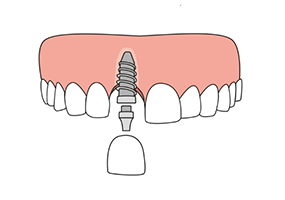
Are you missing just one tooth? Previously, the go-to solution was a dental bridge. Although this is still an option, there are a few downsides, including that it requires the teeth surrounding the gap to be altered. Fortunately, that’s not the case with dental implants! We can replace a single tooth with a single implant, which we will place into the jaw. After you’ve healed from the procedure, we will place an abutment on top, which keeps the permanent restoration stable and even with the rest of your teeth.
Missing Multiple Teeth
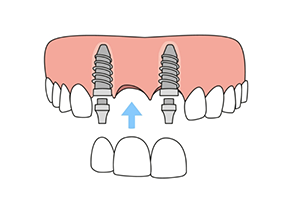
If you are missing several teeth consecutively, we could replace each one individually. However, there is a more convenient solution: an implant bridge. Instead of modifying existing teeth to hold a traditional bridge, a pair of dental implants is used to hold a three- or four-crown bridge. There are several benefits that come with this solution, including that it doesn’t require any existing tooth enamel to be removed just to have your teeth replaced.
Missing All Teeth
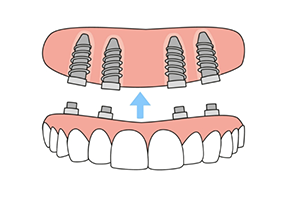
If you are missing several teeth throughout your mouth or you don’t have any of your natural ones left, we have good news: dental implants are usually still an option. In fact, a partial or full denture can be held in place with a series of dental implants that are strategically placed throughout the jaw. Not only does this prevent the need for a dedicated implant for each tooth you intend to replace, but it also leads to added stability and durability.
Understanding the Cost of Dental Implants

The cost of your dental implant treatment depends largely on your specific needs. Factors like the number of implants required and any necessary preliminary treatments, such as bone grafting or gum disease treatment, will influence both the overall cost and duration of your treatment. Despite potential initial expenses, dental implants offer a long-term investment in restoring your smile for decades to come. To learn more about the expected cost, continue reading!
Preliminary Treatments & Dental Implant Surgery

Before proceeding with dental implants, we'll assess if preliminary treatments like bone grafting or gum disease treatment are necessary. While these procedures may increase both the cost and duration of your treatment, they are necessary to ensure the longevity of your new smile. Additionally, the expenses associated with your dental implant surgery vary depending on factors such as implant location and sedation type. Since we partner with outside implant specialists, you can expect a separate bill from their office for this portion of treatment.
The Parts of Your Dental Implant
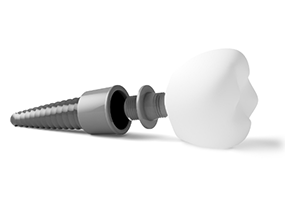
As you can imagine, the primary factor influencing the cost of your treatment is the dental implants themselves. The estimated price is determined by several factors:
- Number of dental implants. The total cost increases with the number of implants required. However, the cost per individual implant typically decreases with higher quantities.
- Type of restoration. Dental implants can support restorations such as crowns, bridges, partials, or full dentures, each with its own associated cost.
- Size or material. The specifications of the dental implants, including length, width, and material composition (such as titanium, zirconia, or other materials), are tailored to each patient's unique needs, influencing the final price.
- Brand of dental implants. We prioritize the use of dental implants from reputable brands known for their high-quality products, ensuring optimal results.
How Dental Implants Can Save You Money

Despite potential higher upfront costs, dental implants offer long-term financial benefits:
- Minimal ongoing expenses. Unlike traditional options, implants don't require special maintenance products, reducing long-term costs.
- Prevention of further tooth loss. Implants prevent jawbone deterioration, preserving surrounding teeth and reducing the need for future procedures.
- Fewer oral health costs. Improved oral health from implants lowers long-term maintenance expenses.
- Longevity. Implants can last a lifetime, minimizing replacement costs associated with bridges or dentures.
Does My Dental Insurance Cover Dental Implants?

While dental insurance typically doesn't cover implants directly, some plans may cover aspects like preliminary procedures or sedation. Our team can review your insurance coverage beforehand to help maximize your benefits.
Making Dental Implants Affordable

Beyond insurance, we offer CareCredit financing for patients seeking alternative payment options. CareCredit provides flexible, low- to no-interest payment plans tailored to your needs, making dental implants more accessible.
Maintaining & Caring for Your Dental Implants
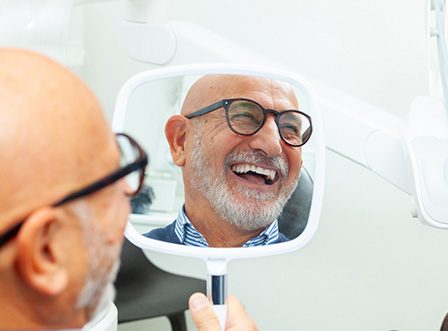
Like many other patients, you may have been drawn to dental implants due to their lifelike appearance and long lifespan. It’s important to keep in mind, however, that you can only enjoy benefits like these if you commit to healthy habits. More specifically, we recommend:
Make Oral Hygiene a Priority

If you don’t take good care of your smile at home, then your breath, your gums, and your dental implants will suffer. That’s why we encourage our patients to incorporate healthy habits into their daily routine, starting with brushing their teeth for two full minutes each morning and evening. It’s also important to floss, rinse with mouthwash, and clean the surface of the tongue.
Tip: Replace your toothbrush (or toothbrush head) every quarter so you aren’t using old, frayed, and dirty bristles to clean your teeth.
Eat a Healthy Diet

Of course, what you eat also matters. After all, if you consistently snack on taffy, peanut butter-filled candies, and other sticky sweets, then it won’t take long for your restoration to fall out. Your crown, bridge, or denture can also crack if you don’t exercise caution with hard pretzels, raw almonds, and the like. For this reason, we recommend sticking to mostly healthy, well-balanced meals instead.
Break Bad Habits

As you may already know, smoking dramatically increases your risk of dental implant failure. That’s why it’s so important to quit! It’s also a good idea to break other harmful habits, like biting your nails, chewing on ice, and using your teeth as tools to open things. After all, it only takes one time for your restoration to break under the pressure.
Tip: If you’d had trouble breaking habits like these in the past, don’t hesitate to let us know! That way, we can share resources and recommendations that have worked for our patients over the years.
Protect Your Dental Implants

Do you like to play tennis or pickleball? Maybe you prefer to ride your bike to stay active. Whatever the case may be, it’s important that you take certain steps to protect your smile from harm, like wearing a mouthguard. Our Austin dental team can have a custom one made for you so that it fits comfortably while also providing your gums, teeth, and dental implants with optimal protection.
Schedule Regular Dental Checkups

Whether you have a single dental implant or an implant denture, it’s important that you schedule a checkup and cleaning every six months. This is important for several reasons, starting with the fact that gum disease and many other common oral health problems can develop and progress under the radar. Plus, these periodic visits ensure that our implant dentist in Austin can examine the condition of your restoration to make sure it’s still in good condition.
Dental Implant FAQs
How Successful Are Dental Implants?
One of the things that distinguishes dental implants from other kinds of tooth replacement options is the fact that they involve surgical placement in the jaw. However, this shouldn’t make you think that dental implants are riskier than dentures or bridges—on the contrary, around 95% of dental implants are successful at 20 years, and many last as long as 30 years without issue.
Our dentist is an experienced professional who knows how to help you avoid the pitfalls of dental implant surgery and can direct you to some of the best implant specialists in Austin. That way, you have the highest chances of long-term success possible.
Am I Too Old to Get Dental Implants?
Many people who could really benefit from dental implants think they are not an option for them, partially because of their age. Fortunately, the good news is that you’re never too old to get dental implants. So long as your mouth is fairly healthy, we can usually find a way to make the procedure work.
It is worth noting, however, that some health conditions do make it harder to get dental implants, and many of these are more likely among older people. Diabetes and cancer, for example, can cause complications while healing from the surgery.
If you have one of these conditions, you may want to talk with your doctor before getting dental implants.
Do Dental Implants Feel Natural?
The fact that dental implants are secured directly to the jawbone makes them feel much more realistic than other tooth replacement options. It affords them a level of strength and security that dentures and bridges don’t have, meaning you can use them to talk and eat naturally.
However, it’s also the case that dental implants don’t contain any nerve endings, so you won’t necessarily be able to feel them the way that you can your natural teeth. Instead, any sense of feeling you get from the tooth will come from the surrounding gum tissue. This might be a little strange at first, but you should get used to the feeling of eating with them fairly quickly.
Do Dental Implants Decay?
Dental implants are made of incredibly sophisticated materials and are therefore much more resistant to decay than your enamel. As a result, you won’t really have to worry about your dental implants developing cavities.
However, your natural teeth are still as prone to tooth decay as ever. Bacterial infection is also a concern, and severe gum disease can potentially put your dental implant in jeopardy if you don’t deal with it properly. You can’t ignore your dental hygiene just because you have an artificial tooth.